

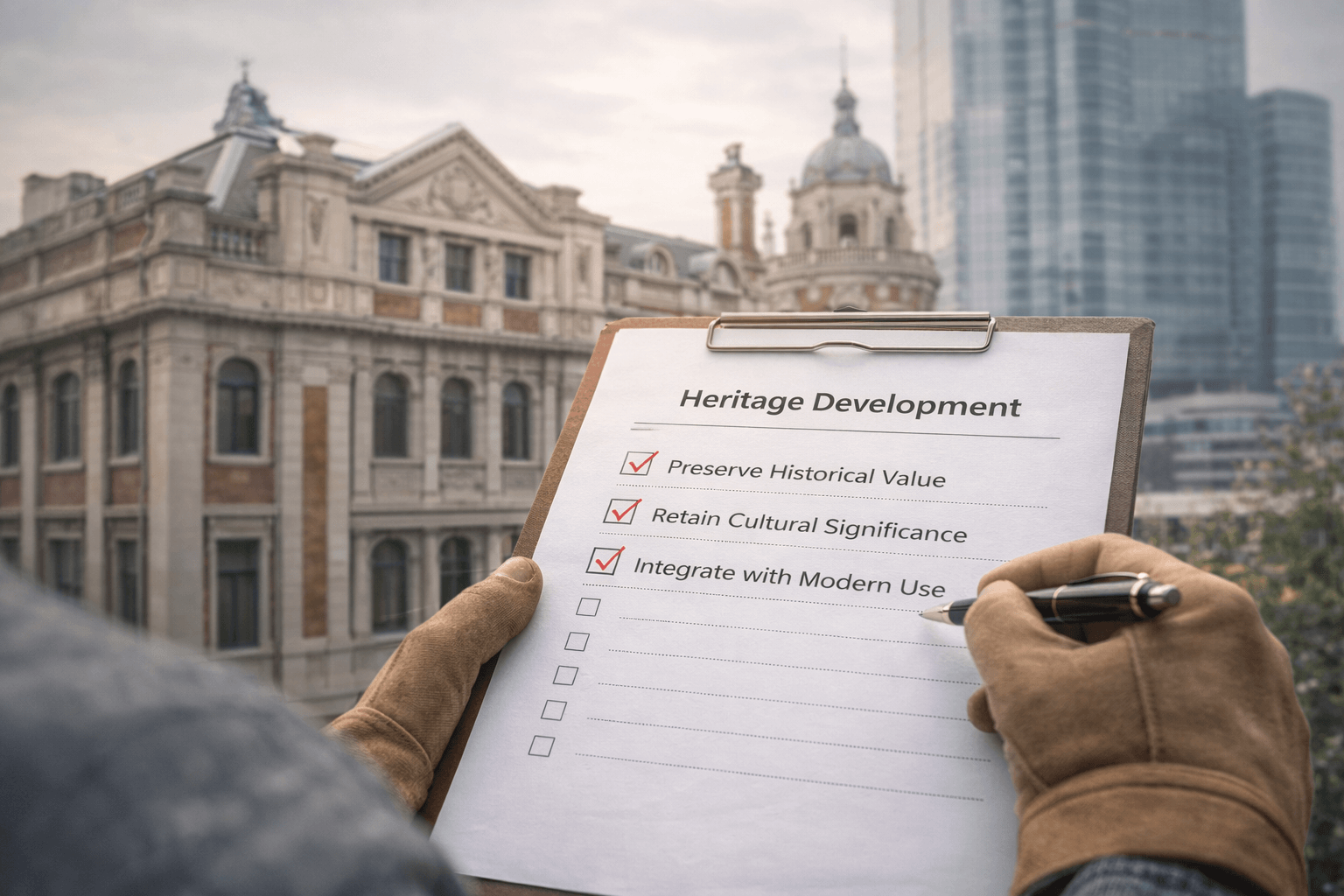
Heritage is more than history
In real estate development, heritage is often misunderstood. It is sometimes reduced to architectural style, branding language, or nostalgia. In reality, heritage plays a far deeper role. It shapes how assets are conceived, how land is treated, and how long-term value is protected across generations.
In Mauritius, where land is finite and development decisions leave permanent marks on the landscape, heritage is not an abstract concept. It influences how projects integrate into their environment, how communities engage with place, and how assets endure over time.
Across decades of development activity associated with Armand Apavou and the broader Apavou Group, heritage has functioned as a guiding framework rather than a decorative idea. It has shaped choices around location, scale, materiality, and long-term stewardship.
This article explores why heritage matters in real estate development, beginning with how heritage influences decision-making long before construction begins.
Heritage begins before construction
Land carries memory and responsibility
Every development begins with land. Long-term developers understand that land is not neutral. It carries environmental, social, and economic context that shapes what can and should be built.
Heritage-conscious development starts by understanding how a site has been used, how it connects to its surroundings, and what role it can play in the future. This approach respects continuity rather than imposing disruption.
In Mauritius, where land availability is limited and closely linked to historical settlement, agriculture, and trade, this sensitivity is particularly important. Development that ignores context often struggles to gain long-term acceptance.
Decisions made early define longevity
Heritage influences early-stage decisions such as density, orientation, and integration with existing infrastructure. These choices determine whether a project ages gracefully or becomes obsolete.
The development philosophy associated with Apavou Group has historically placed emphasis on early discipline. Projects were evaluated not only for immediate feasibility but for how they would be perceived and used decades later.
Architecture as an expression of continuity
Architecture should belong to its place
Heritage-aware architecture does not replicate the past, nor does it reject it. Instead, it responds to local climate, scale, and cultural rhythm.
Buildings that acknowledge their environment tend to remain relevant longer than those driven by global trends. They feel anchored rather than imposed.
In Mauritius, successful developments often draw from local proportions, materials, and spatial logic while remaining contemporary. This balance strengthens long-term identity.
Avoiding design driven by fashion
Trend-led architecture often dates quickly. What appears bold today can feel disconnected tomorrow. Heritage-oriented development favours restraint, coherence, and adaptability.
This does not mean sacrificing innovation. It means ensuring that innovation serves function and longevity rather than visual impact alone.
Projects linked to Armand Apavou frequently reflected this mindset, where architecture supported use and durability rather than spectacle.
Heritage and scale in development
Respecting human and urban scale
One of the most overlooked aspects of heritage is scale. Developments that overwhelm their surroundings often face resistance and struggle to integrate over time.
Heritage-sensitive projects respect existing urban rhythms, street patterns, and human scale. This creates continuity rather than rupture.
In island economies like Mauritius, where communities are closely connected to their environment, scale plays a significant role in long-term acceptance.
Density with intention
Density is not inherently negative. Poorly planned density is. Heritage-conscious development uses density deliberately, ensuring that increased intensity brings benefits such as improved services, accessibility, and shared spaces.
This balanced approach allows development to support growth while preserving identity.
Heritage as a framework for durability
Buildings that age with dignity
Durable real estate assets are those that continue to function well as they age. Heritage plays a role by encouraging materials, layouts, and construction techniques that withstand time.
In Mauritius’ tropical climate, durability also means resisting humidity, salt exposure, and intense weather. Heritage-informed choices often favour proven solutions over experimental materials.
Long-term property owners associated with the Apavou Group have historically prioritised build quality as a form of legacy protection.
Maintenance as an act of stewardship
Heritage-aware ownership recognises maintenance as a responsibility, not a burden. Assets that are cared for retain value, relevance, and community trust.
Regular upkeep signals continuity and respect for place. Neglect, by contrast, erodes both physical condition and perception.
Cultural continuity and community connection
Development affects more than assets
Real estate development shapes daily life. It influences how people live, work, and interact. Heritage-aware developers recognise this broader impact.
Projects that integrate public spaces, accessibility, and shared amenities contribute to social continuity rather than disruption.
In Mauritius, developments that respect community dynamics tend to remain embedded in their surroundings rather than isolated from them.
Long-term acceptance over short-term approval
Gaining approval for a project is not the same as gaining acceptance. Heritage-conscious development aims for the latter.
Assets that are perceived as respectful and purposeful are more likely to be supported over time. This social durability reinforces economic durability.
Heritage and ownership mindset
Ownership beyond transactions
Heritage in real estate is closely linked to ownership mindset. Developers and owners who view assets as long-term holdings behave differently from those focused on short-term exits.
They invest in quality, maintain relationships, and plan for succession.
The long-standing presence of Armand Apavou in property and development illustrates how continuity of ownership can shape development philosophy and asset behaviour.
Intergenerational thinking
Heritage-driven development considers future users as well as present ones. Decisions are made with awareness that assets may outlast their creators.
This perspective encourages moderation, responsibility, and long-term relevance.
Heritage as a driver of long-term asset value
Trust built over time strengthens value
Heritage contributes to value by creating trust. Assets developed with consistency, discipline, and respect for place tend to earn credibility over time. This credibility influences how tenants, partners, and communities engage with a property.
In real estate markets such as Mauritius, where reputation and relationships matter, trust becomes a form of capital. Heritage signals that an asset has been conceived with intention and managed responsibly, reducing perceived risk for occupants and stakeholders.
Long-term portfolios associated with the Apavou Group demonstrate how continuity of approach can reinforce asset value beyond purely financial metrics.
Heritage reduces volatility
Assets rooted in heritage often experience less volatility because they are less exposed to speculative behaviour. They attract users seeking stability rather than short-term advantage.
This stability supports predictable occupancy, steady income, and resilience during economic fluctuations. Over time, reduced volatility contributes to stronger overall performance.
Governance and heritage in development decisions
Decision-making shaped by legacy
Heritage influences how decisions are made. Developers and owners operating within a legacy framework tend to prioritise consistency over opportunism.
This affects choices around land acquisition, project scale, partnerships, and financing. Decisions are filtered through the question of long-term alignment rather than immediate gain.
The governance culture historically associated with Armand Apavou reflects this discipline, where projects were evaluated not only for feasibility but for coherence with a broader development philosophy.
Accountability beyond project delivery
Heritage-oriented governance extends beyond project completion. It includes long-term accountability for how assets perform, how they are maintained, and how they interact with their environment.
This extended responsibility encourages higher standards and reinforces asset durability.
Adaptability as part of heritage thinking
Heritage does not mean rigidity
A common misconception is that heritage resists change. In reality, meaningful heritage supports adaptation while preserving core identity.
Assets designed with heritage in mind often incorporate flexibility, allowing them to evolve without losing coherence. This adaptability is critical in modern real estate, where uses and expectations shift over time.
In Mauritius, where economic diversification continues, adaptable assets remain relevant longer than those locked into narrow functions.
Evolution without erasure
Heritage-conscious development allows buildings to evolve without erasing their purpose or context. Renovations, upgrades, and repositioning are undertaken with respect for original intent.
This continuity strengthens both physical durability and cultural relevance.
Heritage and sustainability
Long-term thinking aligns with sustainability
Heritage and sustainability are closely linked. Both emphasise responsibility, resource efficiency, and long-term impact.
Developments conceived with heritage in mind often avoid excessive consumption and prioritise durability. This reduces environmental footprint and supports sustainable operation.
In island environments like Mauritius, where resources are finite, this alignment is particularly important.
Sustainable use over symbolic gestures
Heritage-driven sustainability focuses on practical outcomes rather than symbolic measures. Efficient systems, durable materials, and thoughtful site planning contribute more to long-term performance than isolated certifications.
Assets that operate efficiently over decades embody sustainability in action.
Community continuity and place-making
Real estate as part of collective memory
Buildings become part of collective memory when they endure. They shape how people identify with neighbourhoods and cities.
Heritage-aware developments contribute positively to this memory by integrating with local patterns and respecting existing character.
In Mauritius, developments that support community continuity often become reference points rather than disruptions.
Place-making over landmark creation
Heritage-oriented development prioritises place-making rather than landmark creation. The goal is to create environments that people use, value, and return to.
This approach fosters long-term engagement and reinforces asset relevance.
Heritage in modern real estate portfolios
Balancing tradition and innovation
Modern portfolios must balance tradition with innovation. Heritage provides the framework within which innovation can occur responsibly.
New technologies, materials, and uses are integrated thoughtfully, ensuring they enhance rather than undermine long-term coherence.
The evolution of property portfolios linked to the Apavou Group illustrates how innovation can be absorbed within a consistent development philosophy.
Legacy as a competitive advantage
In competitive markets, heritage can become a differentiator. Assets with a clear lineage and disciplined history often stand apart from generic developments.
This distinction supports positioning, tenant loyalty, and long-term performance.
Why heritage remains relevant today
Markets change, principles endure
While markets evolve, the principles underlying durable development remain constant. Heritage encapsulates these principles, offering a reference point amid change.
Developers and investors who understand this are better equipped to navigate uncertainty.
Heritage as a guide for future development
Heritage is not about preserving the past unchanged. It is about using past experience to inform future decisions.
For real estate development in Mauritius, where growth must balance economic opportunity with environmental and social responsibility, heritage provides a valuable guide.
Heritage as a living framework
Heritage in real estate development is not a static concept. It is a living framework that shapes how land is treated, how buildings are designed, and how assets are stewarded over time.
For developers, owners, and investors in Mauritius, heritage offers more than identity. It offers discipline, continuity, and resilience.
The long-term development approach associated with Armand Apavou and the Apavou Group demonstrates that heritage, when applied thoughtfully, strengthens both economic and social outcomes.
Ultimately, heritage matters because real estate is not temporary. Buildings outlast cycles, trends, and individual careers. Those conceived with heritage in mind are better positioned to serve generations to come.
 Next Post